

Fall in food items expenditure in household budgets, shows crucial survey
The Household Consumption Expenditure Survey (HCES) showed that monthly per capita expenditure (MPCE) on food items in rural India decreased from 52.9% in the last survey to 46.38% in the current one.
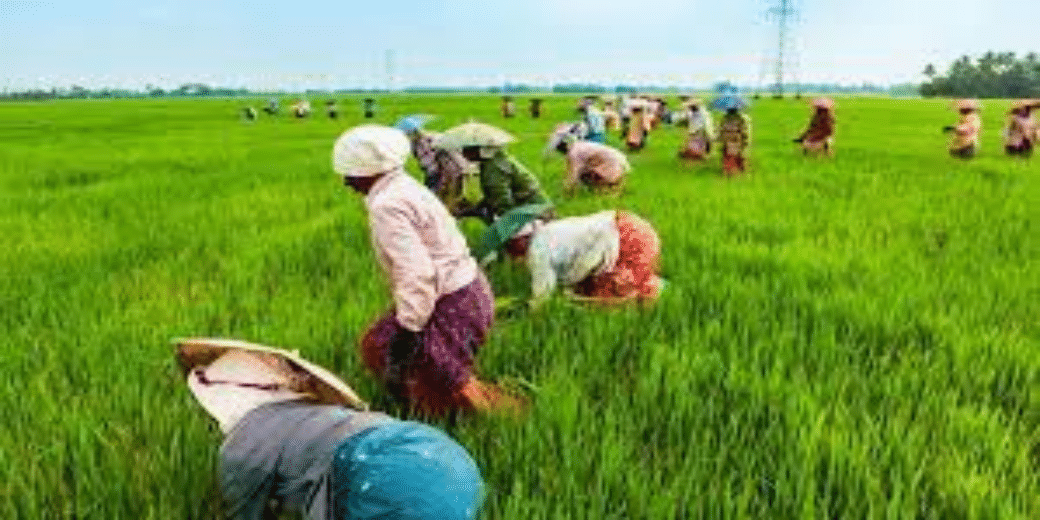
Propounded in the middle of the 19th century, German statistician’s conclusion that as a country’s income rises, the share of earnings the families spend on food items reduces and that spent on other services and goods increases, has turned into a truism. The Household Consumption Expenditure Survey (HCES) recently released by the Ministry of Statistics and Programme Implementation (MOSPI) has demonstrated that the average expenditure on non-food items consumed more than half the income of households for the first time in the country in 2022-23 with a commensurate dip in the share of expenditure by food items.
The survey that holds immense importance in framing economic policies came a good 11 years after the last one which was conducted in 2011-12. It showed that monthly per capita expenditure (MPCE) on food items in rural India decreased from 52.9% in the last survey to 46.38% in the current one.
Urban India demonstrated the same trend. The share of expenditure on food dipped to 39.17% (in 2022-23) from 42.62% in 2011-12. The expenditure on items other than food as a share of monthly per capita expenditure (MPCE) from 47.1% (in 2011-12) to 53.62% (in 2022-23).
The outcome of this survey has significant fountainhead contribution in making poverty, growth estimates as well as that of inflation which further influences a lot of macro-economic policy making.
The survey has shown that MPCE in rural regions has grown as a faster clip than expenditure in the urban counterparts – albeit on a smaller base. Spending inequality between different income categories has also declined in relative terms, found an analysis of The Economic Times.
“The characteristic of consumption in rural areas has also changed due to the rapid urbanisation in the country. Data shows the share of spend on food has come down. This could be a result of free food grains being made available at subsidised costs, while the share of spending on durables like mobiles, fridges, tablets and consumer services, has increased,” P C Mohanan, the former acting chairman of the National Statistical Commission told the Business Standard.
Furthermore, at current prices rural India witnessed MPCE rise to Rs 3,773 in 2022-23 from Rs 1,430 in 2011-12, recording a leap of 1.64 times. For urban areas, the rise was slower — by 1.46 times. MPCE increased from Rs 2,630 in 2011-12 to Rs 6,459 in 2022-23.
Data from the survey signal another interesting fact – the government’s social welfare schemes made a difference in reducing spending inequality. Consumption of the lower-income groups was higher if one attributes the value of such items for free through social welfare programmes such as ration and non-food items which include laptops, mobile, bicycle, motorcycle, school uniform or footwear, besides home-grown stock or goods exchanged in barter.
In urban India, the lowest 50% of households registered a 2.77-time jump in expenditure compared with 2,41-time rise for the top 50% of households. Also, the expenditure gap between top 5% of the households and bottom 5% in urban regions dipped to 10.4 times in 2022-23 compared to 14.7 times in 2011-12. In rural India, the gap reduced from 8.6 times in 2011-12 to 7.6 times in 2022-23.
The bottom 5% families have to survive on Rs 46 a day in rural areas. The figure is Rs 67 in urban India.
Expenditure by the scheduled caste, scheduled tribes and other backward classes rose faster than the rest in both urban and rural areas, though on a smaller base. Displaying the same trend, expenditure by casual labourers and the self-employed increased faster than that by regular salaried workers in urban areas.
Returning to the expenditure on food items in rural India, the money spent on cereals went down from 10.69% of the MCPE in 2011-12 to 4.89% in 2022-23. This, experts pointed out, could be attributable to the Garib Kalyan Anna Yojana delivering free food to BPL families.
As the expenditure on cereals went down, that on vegetables, pulses, edible oils, sugar, and salt also declined. However, the amount spent on milk and milk products; egg, fish, and meat; fresh fruits; beverages and processed food went up.
The non-food items which consumed a bigger pie of the MPCE were toilet articles and household consumables: medical, entertainment, rent, conveyance, paan, tobacco, and intoxicants; and consumer services except conveyance and durable goods. Expenditure went down on education, fuel, light, clothing, bedding and footwear.
In Indian cities, expenditure on cereals, pulses, sugar, salt, egg, fish and meat, and edible oil decreased. Expenditure rose on items such as milk and milk products, dry fruits, beverages and processed foods.
Download Money9 App for the latest updates on Personal Finance.
