

Wanted: An ‘Aatmanirbhar’ Budget that emphasises ‘Aatma Vishwas’
Finance Minister should not present another 'atmanirbhar' budget. Such a budget leaves consumers worse-off without necessarily achieving the intended goal of self-reliance.
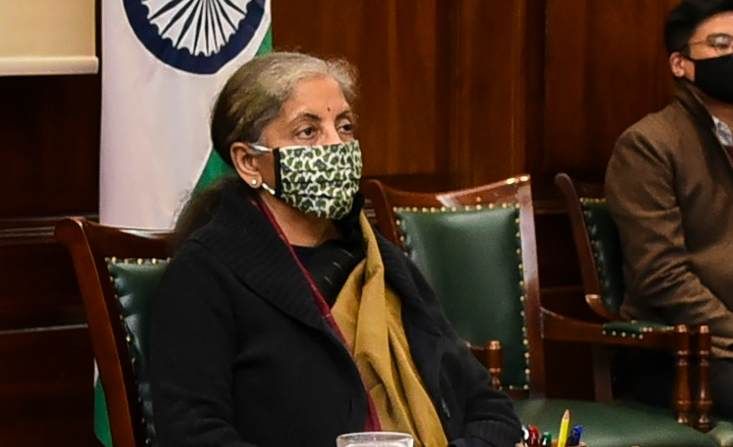
I hope the Finance Minister does not present another ‘aatmanirbhar’ budget. Such a budget leaves consumers worse-off without necessarily achieving the intended goal of self-reliance.
In the last budget the items which the finance minister picked up for special attention looked like a homemaker’s purchase list.
Customs duty was doubled from 10% to 20% on brooms, brushes, motorised mops, feather dusters, paint pads, rollers, squeegees, combs, curlers, vacuum flasks, steel-wool scourers, scouring pads, gloves, padlocks, fans -table, ceiling and pedestal, shavers, water heaters, dryers, coffee makers, toasters, stationary items, balloons, artificial flowers, bells, gongs tableware, kitchenware and water filters.
On toys, the duty was raised three-fold to 60%, as if costlier indigenously-made playthings would be more fun than imported ones.
Footwear and imitation jewellery also got special treatment.
“Make in India is our cherished goal,” Finance Minister had said in her previous budget speech. That justified the hike in import duties on cashew kernels, PVC, vinyl flooring tiles, metal fittings, mountings for furniture and auto parts, certain kinds of synthetic rubbers, marble slabs, optical fibre cable, CCTV cameras, digital and network video recorders.
The proposals were driven also with the objective, among other things, of “curbing non-essential imports.”
After the economic liberalisation of 1991, the government refrained from prescribing what was essential or non-essential. The difference in duties may have influenced choice, but there was no active attempt to curb it, except on sin goods like alcohol and tobacco.
Imports can help exports by putting pressure on domestic industry to shape up, improving quality and reducing cost. The 1998-99 Economic Survey said, “Self-reliance as measured by coverage of imports by exports… improved from about 66 percent in 1990-91 to about 85 percent in 1993-94.” It noted that the ratio had since declined and was 68 percent in the preceding year.
Self-reliance is a malleable concept. As finance minister, Manmohan Singh invoked it to reduce, and not raise, duties. He allayed the fears of members of Parliament that the reduction in duties would lead to the de-industrialisation of India.
The calibrated reduction, giving domestic industry time to adjust was “essential if we are to achieve true self-reliance.” Over a period of two years, Singh cut customs duty on capital goods and machinery from 80 percent to 35 percent – which was quite drastic. The inverted duty structure where some finished goods bore less duty than the components that went into them was progressively reversed.
Singh said the goal was to reach tariff levels prevailing in the East Asian “tiger’ economies to enhance India’s competitiveness. The trend of making projects imports and machinery cheaper continued. In 2008-09, the tariff on them was reduced from 7.5 percent to 5 percent.
Even after the financial crisis of 2008 and despite global demand compression, India did not resort to protectionism. The trend was to reduce customs duties and not raise them. Even Finance Minister Pranab Mukherjee, who belonged to the old school refrained from tinkering, except to raise the duty on set-top boxes from zero to 5 percent “to encourage domestic value addition” as free imports had been allowed to encourage TV subscribers to install them.
Despite the talk of minimum government and maximum governance, the present ruling alliance, now and in its previous term, has jettisoned the commitment to freer trade that held for about 25 years.
We are suspicious of free trade agreements. There can be a debate on balancing the outcomes. The Chinese bogey has been invoked to clamp down on imports. There were similar fears expressed when India dismantled import quotas on 714 tariff lines, including 58 reserved for the small scale sector, in 2001.
A surge in imports was feared. Then Commerce Minister Murasoli Maran had set up a ‘war room’ to monitor imports of 300 ‘sensitive items’ on a monthly basis. The following year, the Economic Survey reported that “empirical data on imports do not suggest any surge in imports.”
The goal of encouraging domestic value addition and Make in India returned with Finance Minister Arun Jaitley’s budget in 2017-18.
Ideologically, the BJP has an affinity to swadeshi and insularity. As the marketing expert Rama Bijapurkar recently wrote, self-reliance should mean self-confidence. We should strive for trade surplus by exporting more than we import. That will create jobs and prosperity. Aatmanirbhar should be achieved through Aatma Vishwas. I hope the budget gives in to that liberating impulse.
(Vivian Fernandes is a senior journalist and former editor. Views expressed are personal)
Download Money9 App for the latest updates on Personal Finance.
