

Agriculture exports: A look at why policy inconsistency matters to the end consumer
A consistent agriculture export policy will go a long way in stabilising the prices of agricultural produce
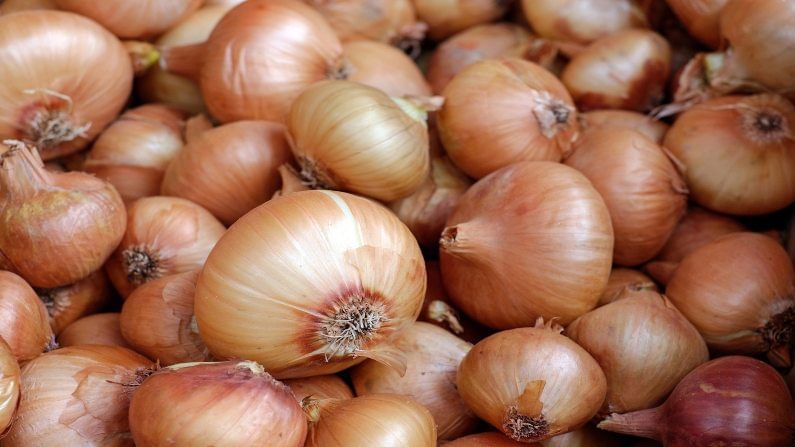
In the last week of August 2015, the wholesale prices of onion had climbed to Rs 60 a kg in the Nashik market. Most trades there happened at Rs 54/kg. Retail prices were around Rs 60 a kg, the same as now. The government took a slew of measures to quell prices. It banned exports below 70 cents/kg (Rs 46) from 25 cents in June. Imports were also ordered. (Prices here are denoted per kg for easier comprehension, though wholesale trades happen in lots of 100 kg [quintals] and exports in tonnes or 1,000 kg).
Exactly, a year later, the situation reversed. Nashik’s wholesale prices fell to Rs 7.80-8 a kg —below the production cost of Rs 10. The Centre gave a 5% subsidy to encourage onion exports. The Maharashtra government too chipped in with Re 1 per kg to relieve onion farmers of distress.
In mid-December 2019, it was the farmers’ turn to rejoice – at least those who had produce to sell. Onions hit the headlines with retail prices at Rs 160/kg in some cities and Rs 200 in others. A bad crop was anticipated because of prolonged and heavy rains. The government had started stocking onions from April. In June, it had withdrawn export benefits. On September 29, it banned exports. Stocking limits were imposed on traders. They were whipped into behaving with income tax raids. The government’s trading company, MMTC, placed orders on suppliers in Afghanistan, Iran and Turkey.
The ban was lifted on 15 March 2020. By then wholesale prices at Nashik were hovering in the range of Rs 14 and retail prices were around Rs 17/kg.
But the ban was re-imposed on six months later. Curiously, it happened just seven days after the Centre had enacted a law —the Essential Commodities (Amendment) Act, 2020 – to ratify an ordinance promulgated in June. Among other commodities, it removed onions from the list of items deemed ‘essential’ on which stock limits could be imposed at whim. The government said the law was needed to develop supply chains. The freedom to “hold, move, distribute and supply,” it said, “would lead to harnessing of economies of scale” and attract investment into the agriculture sector. But it reserved the right to impose stocking limits in extraordinary situations, including when prices rose by 50% or more above the average wholesale prices of the previous five years.
As per the government at the time of the ban in September 2019, prices in Nashik were 54.4% above the five-year average. But instead of invoking the amended act, the government took recourse to the foreign trade act of 1992, for the sake of optics, perhaps.
India’s agriculture policy is focused on consumers and not producers. It is wary of price spikes and consumer outcry but not to price slumps and farmers’ distress. The agony of farmers has been accentuated by the worldwide decline in commodity prices for the better part of the last decade (they have started correcting now).
RBI’s policy of targeting consumer inflation and keeping it less than four percent has aggravated the misery of farmers. It uses Consumer Price Index as the reference. Food items have a weightage of 45.8% in CPI. In the Wholesale Price Index which was its inflation gauge earlier, food items have a lower weight of 24.3%.
There are three harvests of onions in a year: kharif, late kharif and rabi. Much of the supply comes from Maharashtra and Karnataka. Bad weather in these two states affects supply and prices. The solution is to develop better and large storages and also to geographically spread the production of onions closer to the consumption points. Mirzapur in Uttar Pradesh is emerging as a promising venue.
Agricultural produce like onions (or potatoes, pulses and cotton) which the government does not assuredly buy at minimum support prices (unlike rice and wheat) are subject to boom and bust cycles because of ‘rear-view’ farming. The planting decisions of farmers are based on prices of a crop prevailing in the previous season. So there is herd movement into a crop or out of it which results in excess supply or scarcity.
The best policy is to keep trade, domestic and international open, and to regulate supply with exports and imports. Consumers and farmers will lose in some years and gain in others but over a period of time, it will even out. Without the uncertainty of government intervention, farmers will grow for exports, food processors will step in, and foreign suppliers will produce for Indian markets.
But Indian politicians fear voters more than consumers (though the two might overlap at times) and lose their nerve during election time. That’s when the hidden hand of the market is stayed by very visible one of the state.
(Vivian Fernandes is a senior journalist and former editor. Views expressed are personal)
Download Money9 App for the latest updates on Personal Finance.
